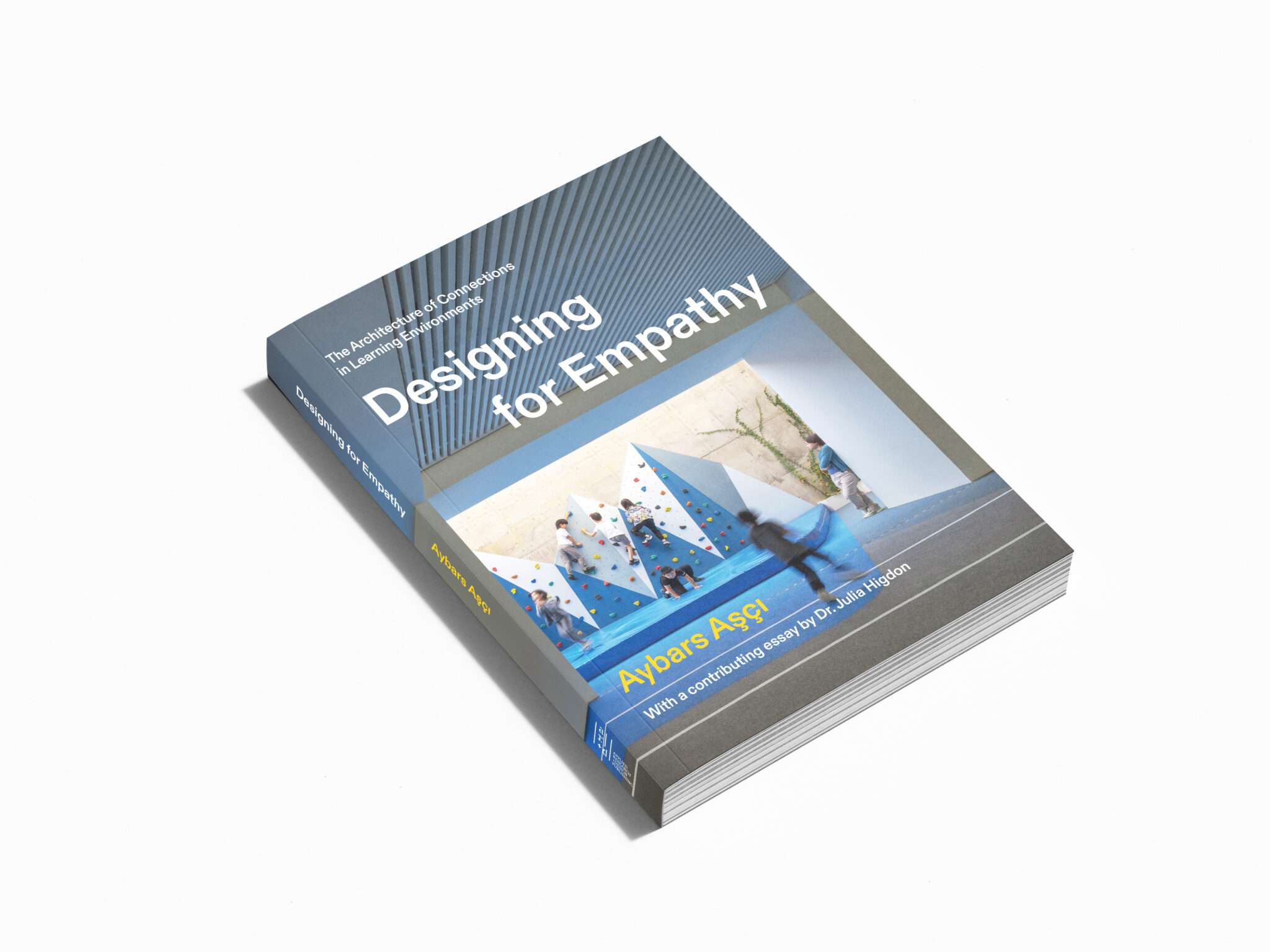
“Through Designing for Empathy, Aşçı initiates an important discussion on how the built environment fosters empathy. Little, if any, existing research explicitly makes this connection.” Teachers College Record, Columbia University
In today’s polarized world, we are increasingly pulled into echo chambers where it becomes harder to understand perspectives other than our own. To have a pluralistic worldview, we need to learn how to consider other vantage points. Can we be nudged to do that?
Designing for Empathy: The Architecture of Connections in Learning Environments explores the inextricable relationship between developmental psychology and our physical environment. By connecting perspective taking in psychology to perspectival space in architecture, the book defines the geometry of empathy. Presenting developmental research alongside design conjectures, Aybars Aşçı postulates that the forces that operate in our spatial cognition can also shift perspectives, thereby helping us develop empathy.